


China has successfully completed a 336-hour hot test of its first mobile low-level combustible waste peroxidize incineration facility, meeting all performance standards. This breakthrough marks a new era in modular and systematic development of nuclear environmental protection equipment manufacturing in the country. The facility provides a safe, efficient, and flexible solution for decommissioning nuclear facilities and managing radioactive waste, all developed domestically.
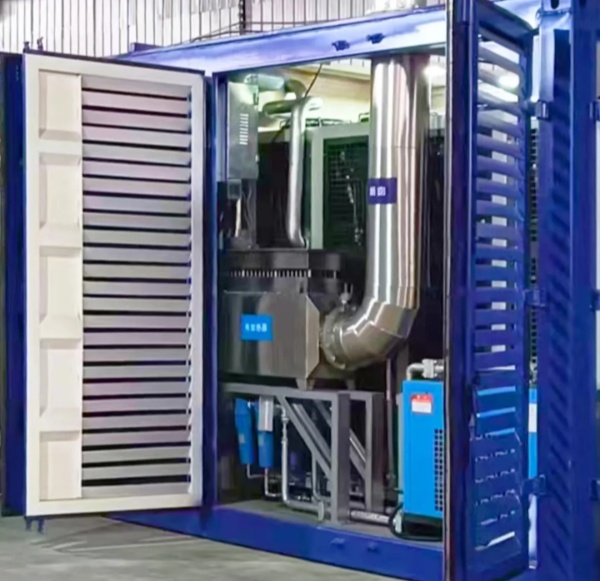
To overcome challenges of long construction cycles, high costs, and limited flexibility in waste incineration facilities, the unit adopts a container-based design that integrates feeding, incineration, purification, monitoring, and remote control. With a treatment capacity of 30–50 kg per hour and a weight reduction ratio more than 20:1, it can efficiently process cotton, plastics, waste oil, and other low-level combustible waste, filling the gap in China's technological pathway for nuclear facility decommissioning treatment.
The facility adopts a core process of peroxidize incineration and multi-level purification, with optimized combustion and integrated exhaust treatment ensuring all emissions meet standards. Monitoring shows that dioxins, particulates, sulfur dioxide, and other emissions are well below national limits, while the wastewater treatment system achieves zero discharge of radioactive effluents. Equipped with intelligent monitoring and remote-control systems, it enables real-time tracking of pollutants such as aerosols and exhaust, and, together with automated feeding and a remote-control cabin, it establishes a 24/7 unmanned safety barrier.
The facility works with 11 other systems, including sorting, conditioning, decontamination, and volume reduction, to form a modular equipment matrix. Its innovative flexible combination and plug-and-play operation model enable rapid redeployment across different locations within a week, significantly cutting costs and shortening construction time. The successful hot test not only validates the facility's engineering application capability, but also strengthens China's radioactive waste management system and supports the upgrading of the decommissioning industry.