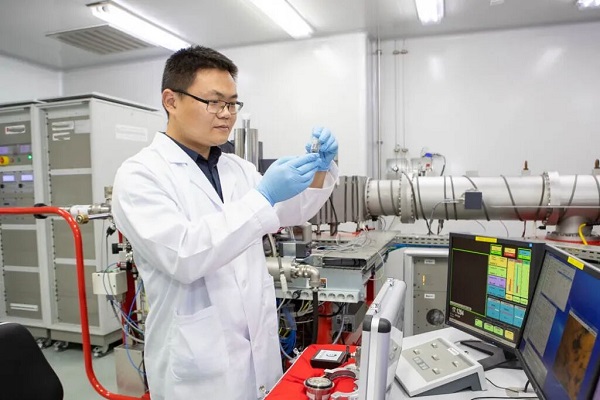


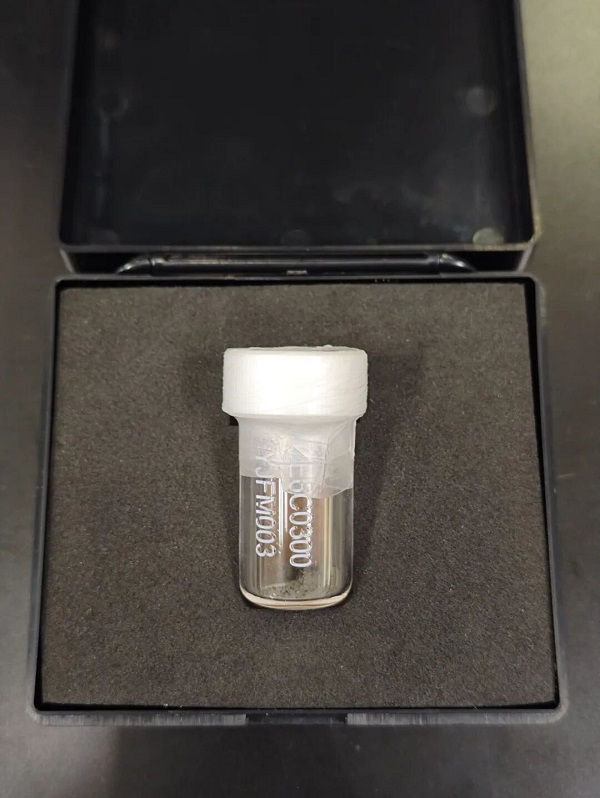
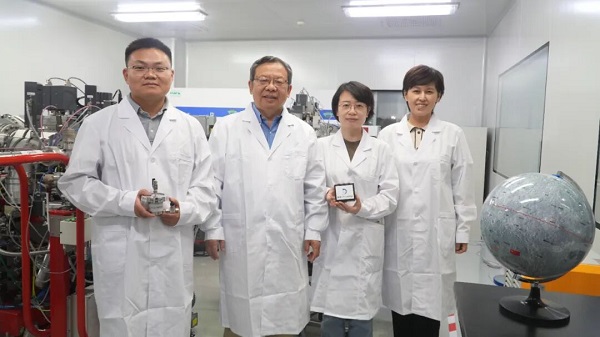
On October 6, the latest research findings on samples from the far side of the Moon, conducted with the participation of the Beijing Research Institute of Uranium Geology under China National Nuclear Corporation (CNNC), were released. For the first time, analysis of lunar soil samples retrieved by the Chang'e 6 mission revealed that the lunar mantle on the far side is "colder" than that on the near side.
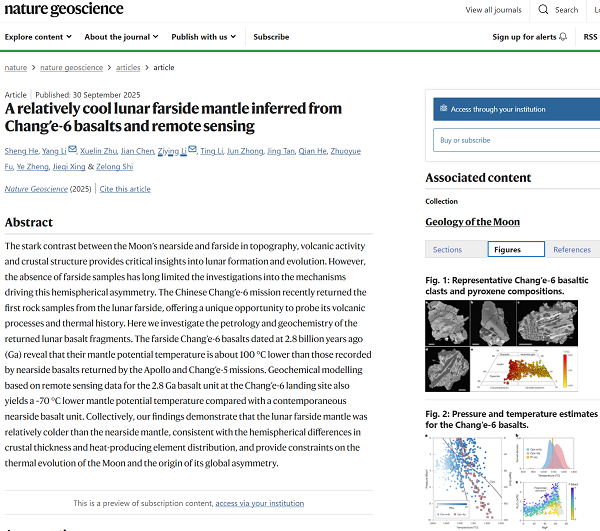
This discovery, which has been published in the academic journal Nature Geoscience, will further deepen the understanding of the Moon's hemispheric dichotomy (the dramatic difference between the lunar near and far sides), provide petrological, geochemical and other scientific evidence for the temperature difference between the lunar mantle on the near and far sides, and present key scientific data for research on lunar evolution and the characteristics of the hemispheric dichotomy. This also marks a new achievement in CNNC’s cross-disciplinary collaboration between nuclear and space scientists.
Located beneath the lunar crust, the lunar mantle is the largest component of the Moon in terms of volume, which is crucial for research on lunar evolution. In the study, scientists used different methods to conduct a detailed analysis of the basalt samples brought back from the Moon's far side by China's Chang'e-6 mission.
By analyzing the compositions of typical minerals in the lunar basalt samples — including clinopyroxene and plagioclase — they calculated the crystallization temperature and pressure using three different thermobarometers. To ensure the scientific validity of the results, the team simulated the crystallization process of Chang'e 6 basalt samples through a petrological model.
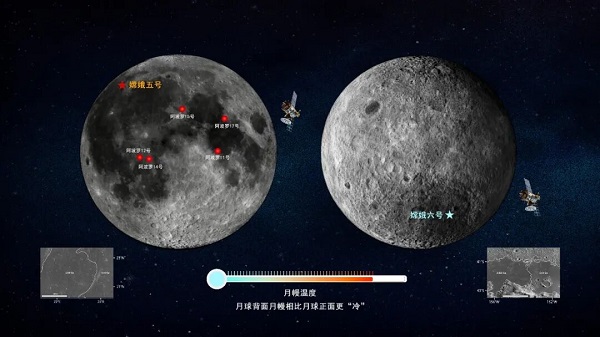
The four independent methods yielded consistent results — the crystallization temperature of the basalt samples is about 1,100℃, approximately 100℃ lower than that of samples from the near side.
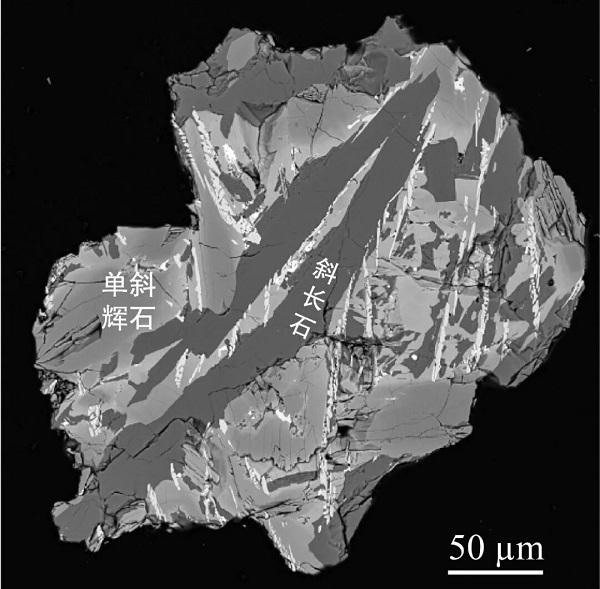
The team also reconstructed the chemical composition of the Moon's original magma and calculated the potential temperatures of the lunar mantle. They found that the potential temperature of the lunar mantle on the far side (about 1400℃) is about 100℃ lower than that on the near side (about 1500℃). In addition, the team used lunar remote-sensing data to conduct verification and analysis on a larger regional scale. The result showed that the potential temperature of the Moon's mantle on the far side is about 70°C lower than that of the near side, consistent with the sample-based results — further strengthening the credibility of the study.