


On October 15, the China National Nuclear Corporation (CNNC) organized the China Side Event of the 30th IAEA Fusion Energy Conference in Chengdu, Sichuan province.
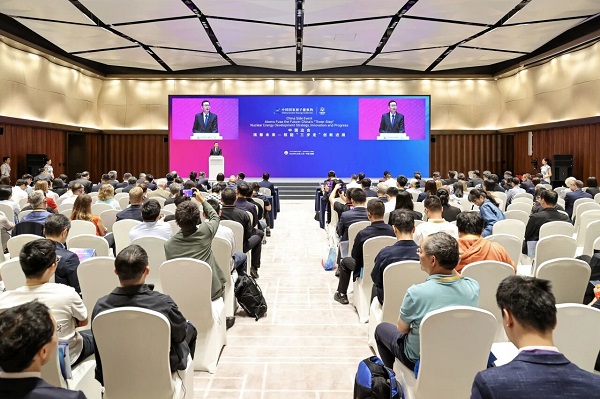
Themed "Atoms Fuse the Future: China's Three-Step Nuclear Energy Development Strategy, Innovation and Progress", the event aimed to share China's planning, progress, and experience under its "Three-Step" nuclear energy development strategy, while fostering international dialogue and exploring broader cooperation in the global nuclear field.
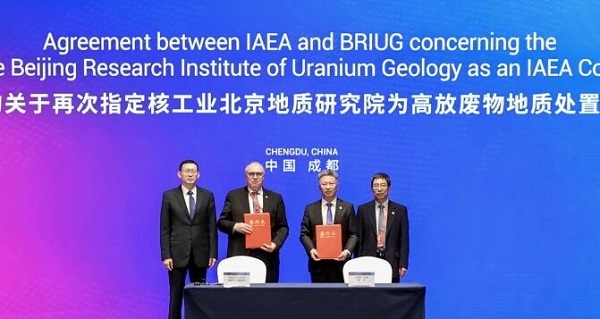
Several nuclear energy cooperation agreements were signed during the event. The Beijing Research Institute of Uranium Geology (BRIUG) signed an agreement with the International Atomic Energy Agency (IAEA) to renew its designation as an IAEA Collaborating Center for Geological Disposal of High-level Radioactive Waste. Brazil's National Nuclear Energy Commission and China Isotope & Radiation Corporation (CIRC) signed a Memorandum of Understanding on Cooperation in Isotope Procurement. The Pakistan Atomic Energy Commission (PAEC) signed a Memorandum of Understanding on Controlled Nuclear Fusion with China National Nuclear Corporation Overseas Ltd. (CNOS) and the Southwestern Institute of Physics (SWIP).
The event also witnessed the release of the Directory of China's Nuclear Fusion Industry Chain, which provides the international community with a clearer overview of China's full-chain capabilities in fusion energy — from fundamental research and key technology development to engineering applications, thereby creating broader opportunities for global cooperation and exchange.
During the technical reporting session, four Chinese experts delivered keynote presentations on innovation progress under the "Three-Step" strategy, highlighting advances in thermal reactors, fast reactors, fusion technology, and integrated nuclear energy solutions. Participants engaged in in-depth discussions with the speakers, gaining deeper insights into the evolution and future vision of China's nuclear energy strategy.
As a key part of the 30th IAEA Fusion Energy Conference, the side event attracted nearly 300 participants, including representatives from local governments, national nuclear agencies, and research institutions from multiple countries.