


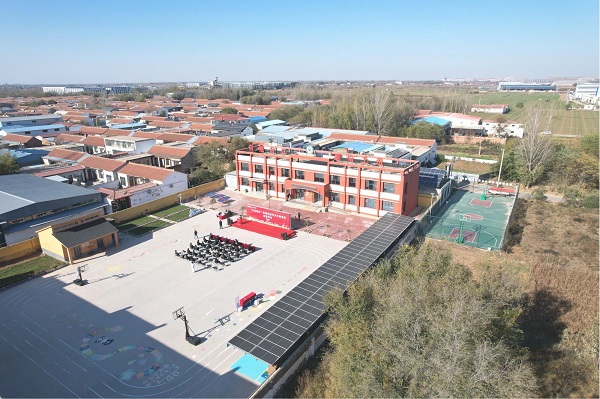
On November 19, China National Nuclear Corporation's (CNNC) "solar–geothermal" clean energy demonstration project successfully completed its 360-hour trial run, followed by a commissioning and handover ceremony at Aicun Village Primary School. As the first campus clean energy project in Pingxiang county, North China's Hebei province, it adopts a tri-generation system for cooling, heating and electricity, achieving green energy substitution and supporting rural revitalization and China's dual-carbon goals.
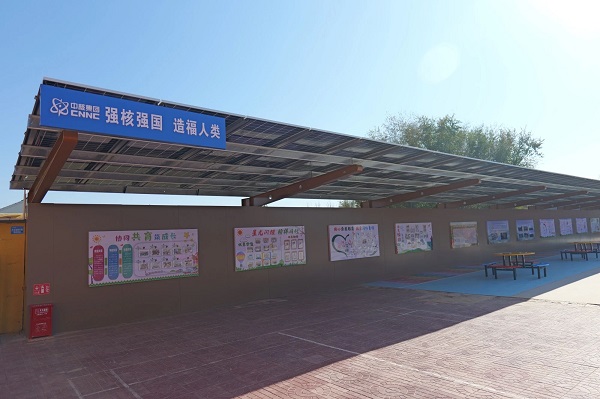
Tailored to the school's energy needs, the project integrates photovoltaic power generation with a ground-source heat pump system. It supports summer cooling, winter heating, and solar power generation for both self-use and surplus power fed into the grid. The PV system provides 40 kW of grid-connected capacity, while the heating/cooling system covers 955.9 m² of school buildings—effectively solving the school's previous challenges of high energy costs, low efficiency and unstable performance.
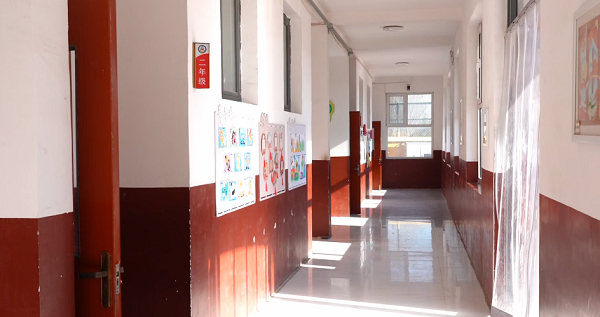
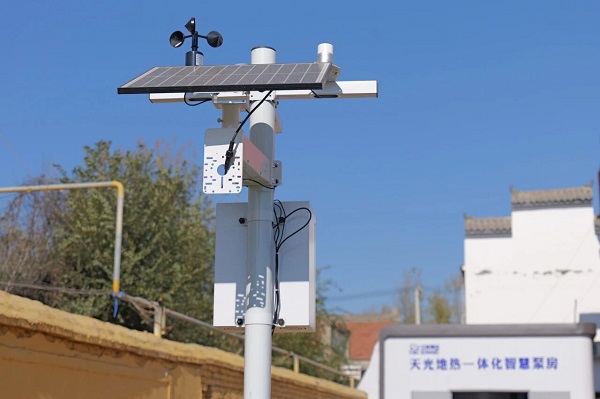
Once operational, the system not only meets the school's daily energy demands, but also reduces electricity expenses and generates stable additional income through "self-use with surplus power fed into the grid".
Leveraging this demonstration project, CNNC is advancing the integrated development of new energies such as solar and geothermal energy through three key innovations.
1. Model Innovation
By maximizing available school land, CNNC has delivered a customized solution to address winter heating challenges. A solar corridor was paired with a ground-source heat pump system, forming a "new energy +" model that boosts overall energy efficiency.
2. Technological Innovation
The system enables multi-energy complementarity and cross-seasonal heat storage. Ground-source heat pumps use shallow geothermal energy as a "natural thermal battery": excess heat collected from buildings during summer is stored underground to replenish soil heat, then extracted in winter for heating. An intelligent energy management system adjusts the heat pump's power using smart algorithms and applies differentiated temperature-control strategies for class time, lunch breaks and after-school periods—greatly improving efficiency and reducing costs.
3. Scenario Innovation
As CNNC's first successful "solar–geothermal" application in a campus setting, the project provides a strong model for broader adoption across rural scenarios.
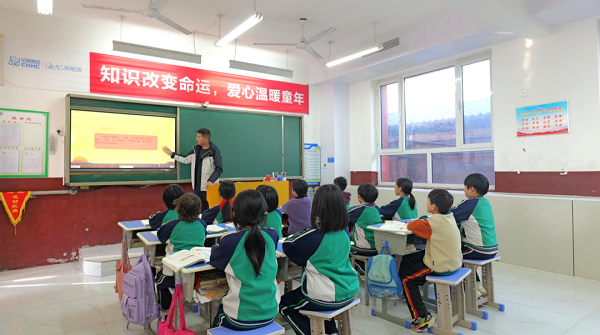
Following the ceremony, project partners engaged in activities such as "Educational Support: Watching Growth" rural student aid and "Nuclear Science Popularization" micro-classes, contributing to local educational development and green, low-carbon transition.
Looking ahead, CNNC will expand the application of its standardized solar–geothermal product portfolio and customizable, menu-based solutions across northern and central China, helping accelerate the industry's transition toward a zero-carbon future.